
Quartzite vs. Granite Countertops for Natural Stone Kitchen Remodels
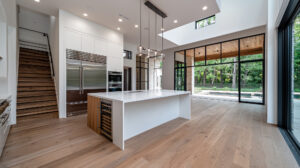
When homeowners in Medina and Wooster start planning a kitchen renovation, natural stone countertops almost always sit near the top of the wish list. While engineered quartz has gained plenty of attention in recent years, many cooks and design-minded homeowners still gravitate toward the one-of-a-kind veining and geological depth of real quarried stone. Two of the strongest contenders—granite and quartzite—offer remarkable durability, yet they differ significantly in appearance, porosity, and day-to-day care.
Although their names sound similar to engineered quartz, both granite and quartzite are 100% natural stones cut directly from the earth. Understanding how they form explains why they look and behave differently on your kitchen island.
Granite is an igneous rock formed from cooled magma, composed primarily of quartz, feldspar, and mica. This mineral blend gives granite its signature granular, flecked, or swirling patterns in shades ranging from warm creams and browns to deep blacks and blues. Because it forms under intense heat, granite is remarkably resistant to scorching from hot pots and pans and stands up well to daily chopping and prep work.
Quartzite begins as quartz-rich sandstone that undergoes extreme heat and pressure deep within the earth, fusing the quartz grains together into an ultra-dense metamorphic stone. The result is a surface that often mimics the soft, flowing veins of white or gray marble while ranking even harder than granite on the Mohs hardness scale. For homeowners who love the airy look of Calacatta or Carrara marble without the worry of acidic lemon juice or tomato sauce etching the surface, quartzite is a compelling alternative.
Choosing between granite and quartzite involves weighing aesthetics, maintenance habits, and budget:
- Visual movement: If your kitchen features shaker cabinets in warm white or natural wood and you want dramatic, sweeping veins as a focal point, quartzite delivers that luxury look. If you prefer rich mineral flecks that naturally disguise crumbs and daily wear between wipe-downs, granite excels.
- Sealing and stain resistance: Both stones are naturally porous to varying degrees and benefit from periodic sealing to repel oils, coffee, and red wine. Lighter-colored quartzites can occasionally be slightly more absorbent than dense dark granites, making routine sealing—typically once a year—an important habit.
- Budget and slab availability: Granite generally offers a broader range of entry-to-mid-level price points, while exotic, heavily veined quartzites often sit at a higher investment tier due to quarrying and fabrication complexity.
Because no two natural stone slabs are identical, choosing from a tiny four-inch sample square rarely tells the whole story. Bring a cabinet door sample, a flooring swatch, and a photo of your kitchen lighting when viewing full slabs so you can see how undertones interact across a large surface area. Ask your fabricator how veins will align at island waterfalls or corner seams.
At National Design Mart, our indoor slab displays and free in-house designers make comparing granite, quartzite, marble, and dolomite straightforward and stress-free. Whether you are updating a compact galley kitchen or designing a spacious gathering island, seeing full slabs up close ensures zero surprises on installation day. Explore our Medina and Wooster showroom locations to view available slabs and remnants in person and bring your kitchen vision to life.